The cherry-blossom park
Even If This Love Disappears From the World TonightThe cherry-blossom park is a recurring place of companionship and attempted remembrance in Maori’s life. Its spring blossoms frame outings with Izumi and Tooru, and a phrase about petals as “snow that never knew the sky” becomes a clue linking those visits across the gaps in Maori’s memory. The park’s importance lies not only in what happened there, but in how a familiar place can hold traces that written records, stories, and repeated visits help her approach again.
Setting and Early Visits
The park is famous for its cherry blossoms, whose seasonal appearance gives the setting a recurring place in the story’s passage from winter into spring. During spring break, after winter is nearly over, Maori, Tooru, and Izumi have a picnic beneath the trees. Looking up through the branches, Maori listens as Tooru shares a poet’s description of the blossoms as “snow that never knew the sky.” She has not heard the phrase before, but recognizes how the petals can look like snow. Tooru’s graceful observation becomes attached to the park and to this shared spring outing.
The park is also part of the future Maori is learning to sustain despite her amnesia. On graduation day, Izumi watches her celebrate with her diploma and thinks about the supports that will help her continue: the journal connecting her present self with her earlier selves, her daily drawing practice, her ability to improve, and Tooru. The prospect that Maori will no longer see him every day does not make the park’s earlier role less significant; it belongs to a life built from recurring routines and relationships, even when waking each morning means facing her condition again.
Return as a Place of Reflection
After Maori recovers from amnesia, the park becomes one of the places where she and Izumi meet again. On a sunny spring afternoon, they celebrate Maori’s university acceptance with a picnic beneath the cherry blossoms. The trees are already in early bloom; the breeze rustles them, and its chill remains noticeable. They eat Izumi’s homemade bento and walk through the park together. When Izumi pours fruity, refined black tea from her thermos, Maori says that its smell seems familiar.
That sensation brings the park’s present into contact with a remembered visit elsewhere. Izumi recalls that during their second year of high school, she and Maori went to the aquarium alone after Tooru ran into his sister. They brought the chirashizushi he had prepared in the rattan picnic basket, along with tea he had chosen to go with the rice. Maori had remarked then that the tea seemed familiar because Tooru had made it for them at his house before. Izumi explains that smell can evoke memory through its connection with the hippocampus, which processes memory and emotion. The scent does not restore a complete past: a blossom falls toward the amber tea and drifts aside, as Maori wonders whether she will always come close to remembering Tooru only for the memory to slip away.
Repetition, Records, and Reunion
The park’s importance continues through repeated visits and the records Maori consults in trying to recover what she has lost. Three years after she recovered from amnesia, she is still searching for Tooru in her past. She uses her journal and Izumi’s stories as guides, returning to places they visited and repeating things they did together. The attempts do not work as simply as the familiar tea’s scent might suggest, but, little by little, Maori remembers him. The park is one destination in that ongoing effort, not a device that instantly resolves it.
Izumi and Maori arrange to meet there on a sunny Sunday. The park is crowded, and Maori sits on a large picnic blanket in a spot with a good view of the blossoms. She has chosen the location herself for the first time, saying she does not mind keeping their place while she sketches the trees; drawing will make the time pass. Other people, probably friends from university, sit with her. This image matters alongside her search for Tooru: she is trying to recover a lost part of her life while also living her current one fully.
As they walk along a blossom-lined path, Maori carries her sketchbook because she wants to draw the flowers. Izumi asks what happened after the point they had previously discussed. Maori does not ask what Izumi means. Instead, she hands over her sketchpad, filled with landscapes, portraits, animals, and other drawings. Asked about the cherry blossoms, she says they really do look like snow and recalls reading in her journal the phrase about snow that never knew the sky. She connects the words to this park and remembers that Tooru told them there about the poet who used them.
Drawings and the Park’s Significance
The remembered phrase is a specific return: Maori recognizes the words not merely as something preserved in writing, but as something spoken during a visit with Tooru at the park. The setting thus joins several forms of memory. The journal preserves the sentence; Izumi can recount their shared past; the blossoms bring the earlier outing into view; and Maori’s own response shows that some connection has become available to her again.
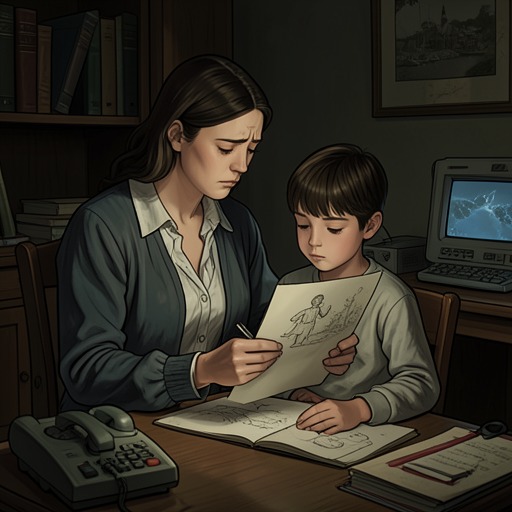
When Izumi looks through the sketchbook, she finds drawings of Tooru she has never seen before. Earlier sketches show him looking aside, frowning shyly, or smiling faintly. These drawings are different: they show Tooru as Maori remembers him. Their precision makes his remembered presence feel newly asserted, as if the drawings declare that he really existed. Izumi hears his familiar voice almost in imagination, then looks toward Maori, who is staring at a row of cherry trees with the concentration of someone trying to recall something.
The park therefore holds more than a sequence of spring picnics. It is a place where remembrance remains partial, mediated, and personal: a phrase returns through a journal, a scent recalls an earlier meal, and sketches give shape to a person Maori is gradually recovering. The blossoms do not erase the distance between past and present; they make that distance perceptible, while giving Maori and Izumi a familiar place in which the past can be approached again.